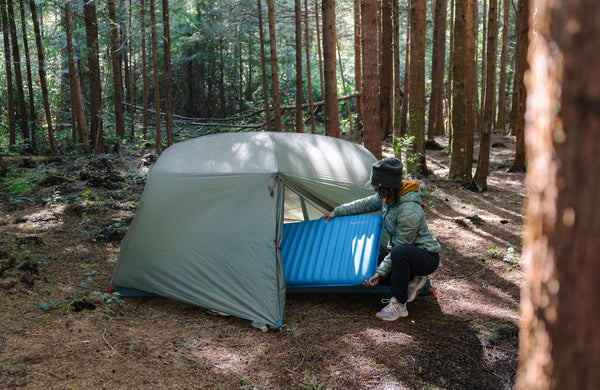
Pitching a tent is easy once you've done it once. The first time, in the wind, with the light going, is when it goes wrong. So do your first pitch at home, then follow these steps on the hill.
Before you go
- Check everything is there: tent, poles, pegs and guylines. Every hire from us is checked before it goes out, but it's worth a look.
- Have a practice pitch in the garden or a park. It takes ten minutes and saves an hour of swearing later.
Choose your spot
- Flat, with no rocks or roots under where you'll sleep.
- Out of the wind if you can find shelter, and not in a dip where water collects.
- Have a look up too. Avoid camping under dead branches.
Pitching
- Lay it out. Spread the tent flat with the door facing away from the wind. If you have a footprint, put it down first.
- Peg the windward end. In any breeze, put a couple of pegs in first so the tent doesn't take off.
- Assemble the poles. Let the shock cord pull each section together. Don't flick them out like a whip, which can crack the ends.
- Raise the tent. Feed or clip the poles in. Many of our tents pitch the fly and inner together, so the inside stays dry in rain.
- Peg it out. Pull the corners taut and push pegs in at about 45 degrees, leaning away from the tent.
- Guy it down. Peg out the guylines and tension them evenly. The fly should be taut and shouldn't touch the inner.
- Check it. Walk round once. Tighten anything flapping and open the vents to cut condensation.
Mistakes everyone makes
- Skipping the guylines. They're what keep the tent standing in wind, and they keep the fly off the inner.
- A slack fly. If it touches the inner, water and condensation come through.
- Losing pegs. Keep them in their bag, not in the grass.
Taking it down
Shake off what water you can, pull the pegs and count them, and fold the poles section by section from the middle. Pack it all back into the bag it came in. If you're sending it back to us, don't worry if it's wet. We dry and clean every tent after every hire.