Swimming outdoors feels nothing like the pool. The water is colder, you can't see the bottom, and there's no wall every 25 metres. That's exactly why it's worth a few practice swims before race day.
Where to swim
For your first few swims, go to a lake or venue with lifeguards or safety cover. Many open-water venues run organised sessions, and your local triathlon club may run group swims. Swimming with others is safer, and you'll learn faster.
What to bring
- A wetsuit that fits properly (see our wetsuit sizing guide)
- A brightly coloured swim cap, so you can be seen
- Goggles. Tinted lenses help on bright days
- A tow float, if the venue allows or asks for one
- Warm clothes, a hat and a hot drink for afterwards
- Something to stand on while you change
Getting in
- Go in slowly. Cold water can make you gasp. Walk in, splash your face and neck, and let your breathing settle before you start swimming.
- Breathe out underwater. Blow bubbles steadily. Holding your breath is what makes it feel panicky.
- Start close to the edge. Swim parallel to the shore before you head out.
Swimming straight
Without lane lines, everyone drifts. Every few strokes, lift your eyes forward just above the water, like a crocodile, to spot a buoy or landmark, then carry on. It's called sighting, and it's worth practising in the pool too.
If it feels too much
Roll onto your back, float and breathe. Wave an arm if you need help. Everyone feels the cold and the panic the first time, and it gets much easier with each swim.
Afterwards
Get dry and warm quickly, even if you feel fine. You can carry on cooling down after you get out, so layers, a hat and a warm drink go on straight away.
Race day
Most UK triathlons expect or require a wetsuit for the swim. The rules depend on the water temperature and the distance, and the race briefing will confirm them on the day.
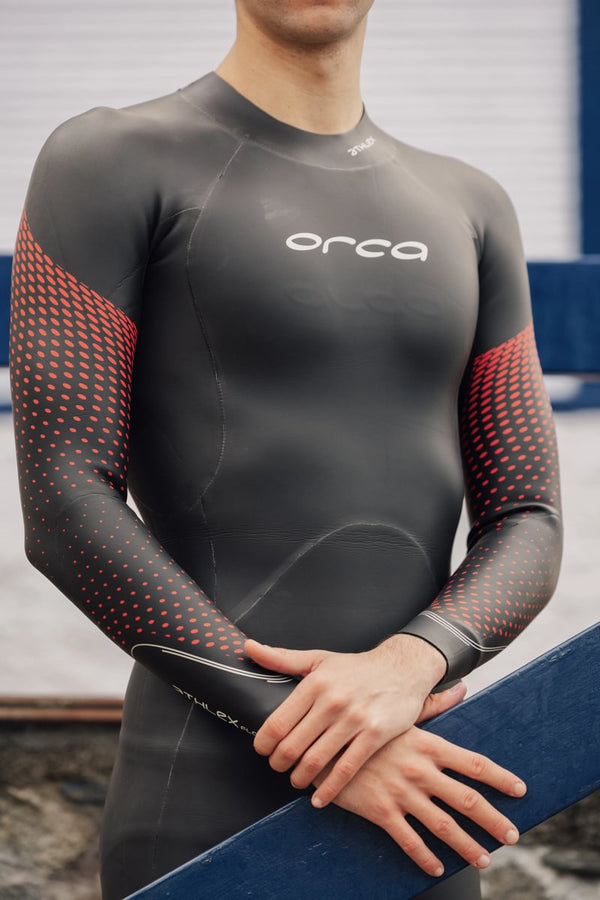
We hire Orca wetsuits for 7 to 60 days, so you can get used to the suit in practice swims before your race. See all our triathlon hire.